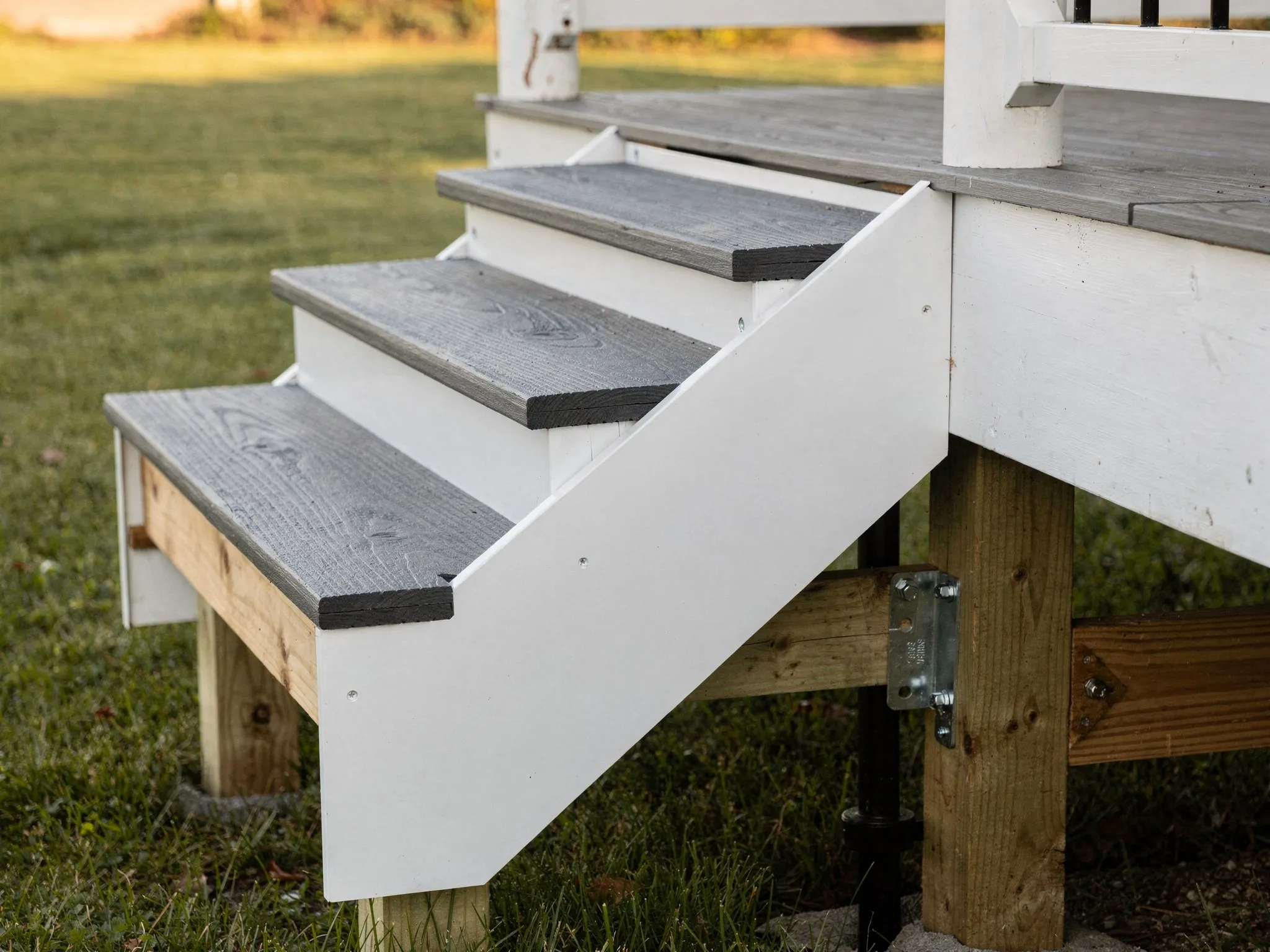
Composite deck repair starts with board replacement, structural frame inspection, and fastener repair to the manufacturer's specifications. Loose clips, cracked boards, or uneven edges can interrupt your footing and point to problems underneath. We check both before recommending the repair.
Match the board and its fastening system
We identify your decking's brand, profile, thickness, and attachment method before selecting replacement boards. Our composite work includes Trex, TimberTech, Fiberon, Deckorators, and MoistureShield. Discontinued colors and weathered surfaces can limit an exact match, so we explain those differences before you approve materials.
We check hidden clips and surface screws for compatibility with your decking. Replacement work follows the applicable manufacturer's requirements for board spacing, fastening, and support. Those details allow composite boards to expand and contract through Omaha's temperature changes.
Address movement beneath the surface
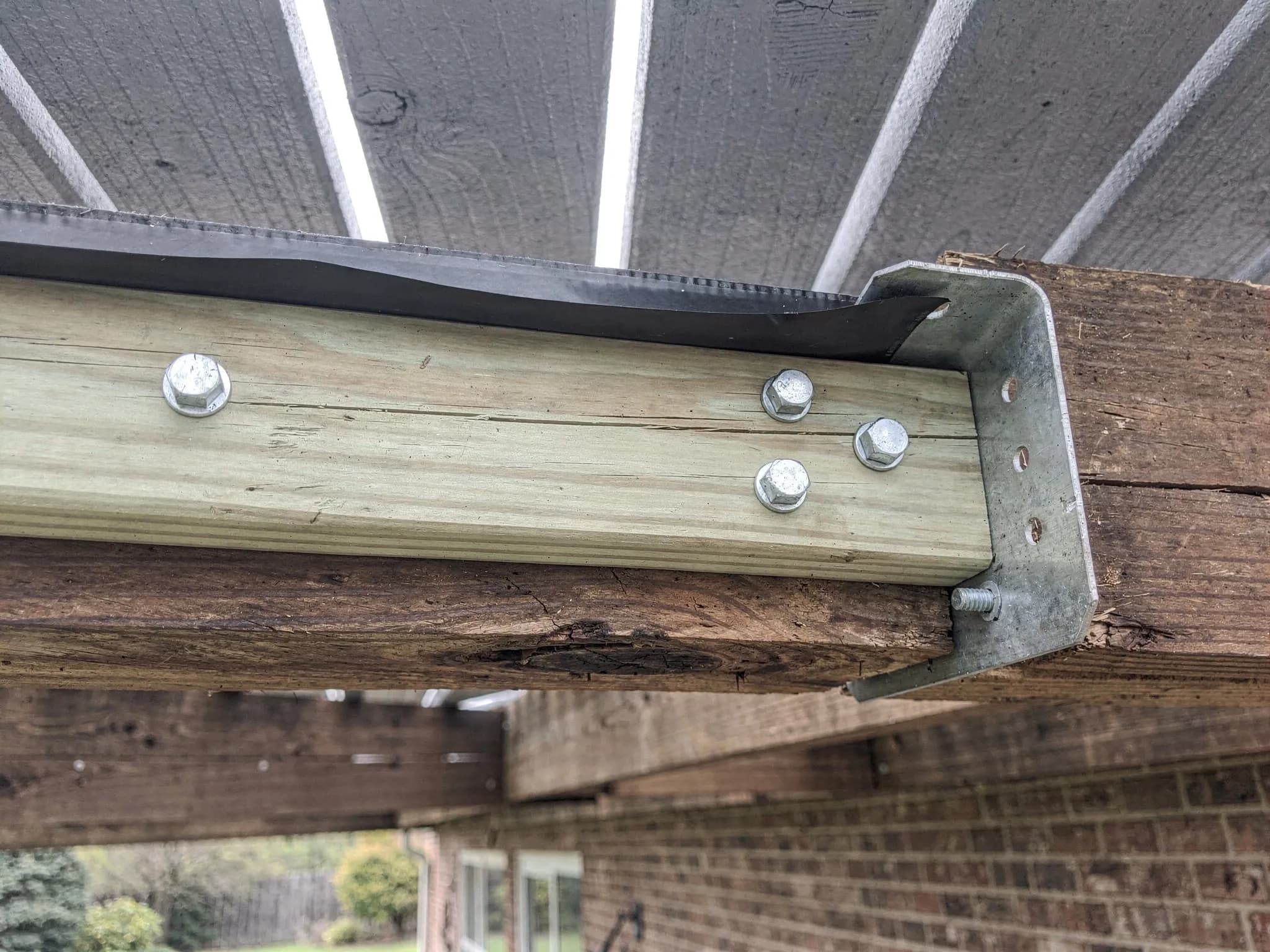
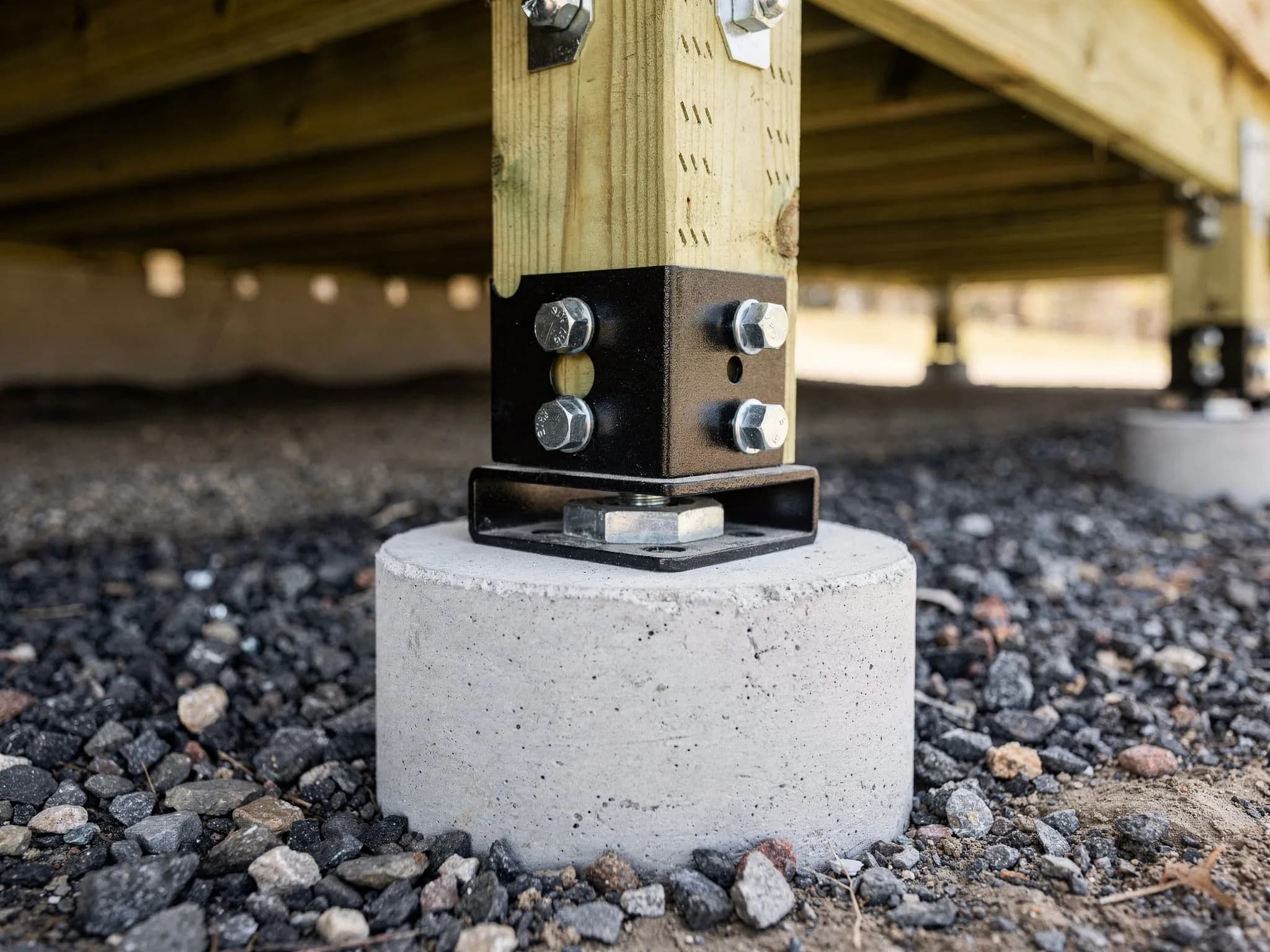
Composite boards resist rot, but the wood framing beneath them can still deteriorate. We inspect accessible framing and connections for damage that could undermine a surface repair. Your scope may include rotted joist replacement, ledger board repair, or frame reinforcement.
Where appropriate, we specify Simpson Strong-Tie hardware, joist tape, and ledger flashing as separate line items. Joist tape helps protect framing tops from moisture. Ledger flashing directs water away from the connection between your deck and home.
Know the scope before work begins
Your itemized quote identifies replacement decking, fasteners, structural repairs, labor, and selected protection upgrades. Your project manager explains the sequence and discusses any concealed damage uncovered during removal before additional work proceeds.
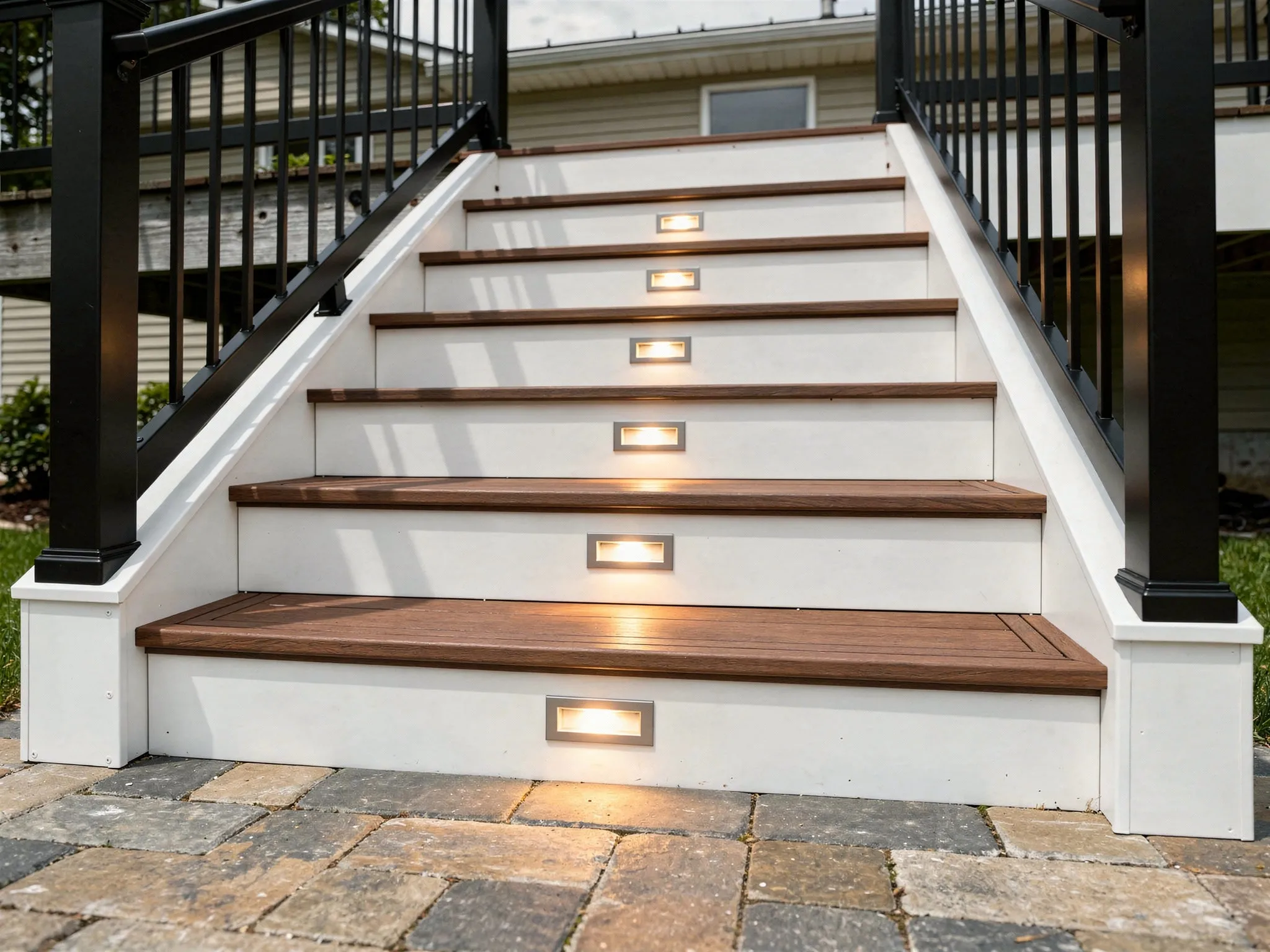
We protect your yard, siding, and nearby landscaping, and keep the work area clean each day. Our fully licensed and insured team finishes with a walkthrough of the repaired boards, connections, and any affected railing.